Home / Matching Remnants to Existing Counters
Matching Remnants to Existing Counters
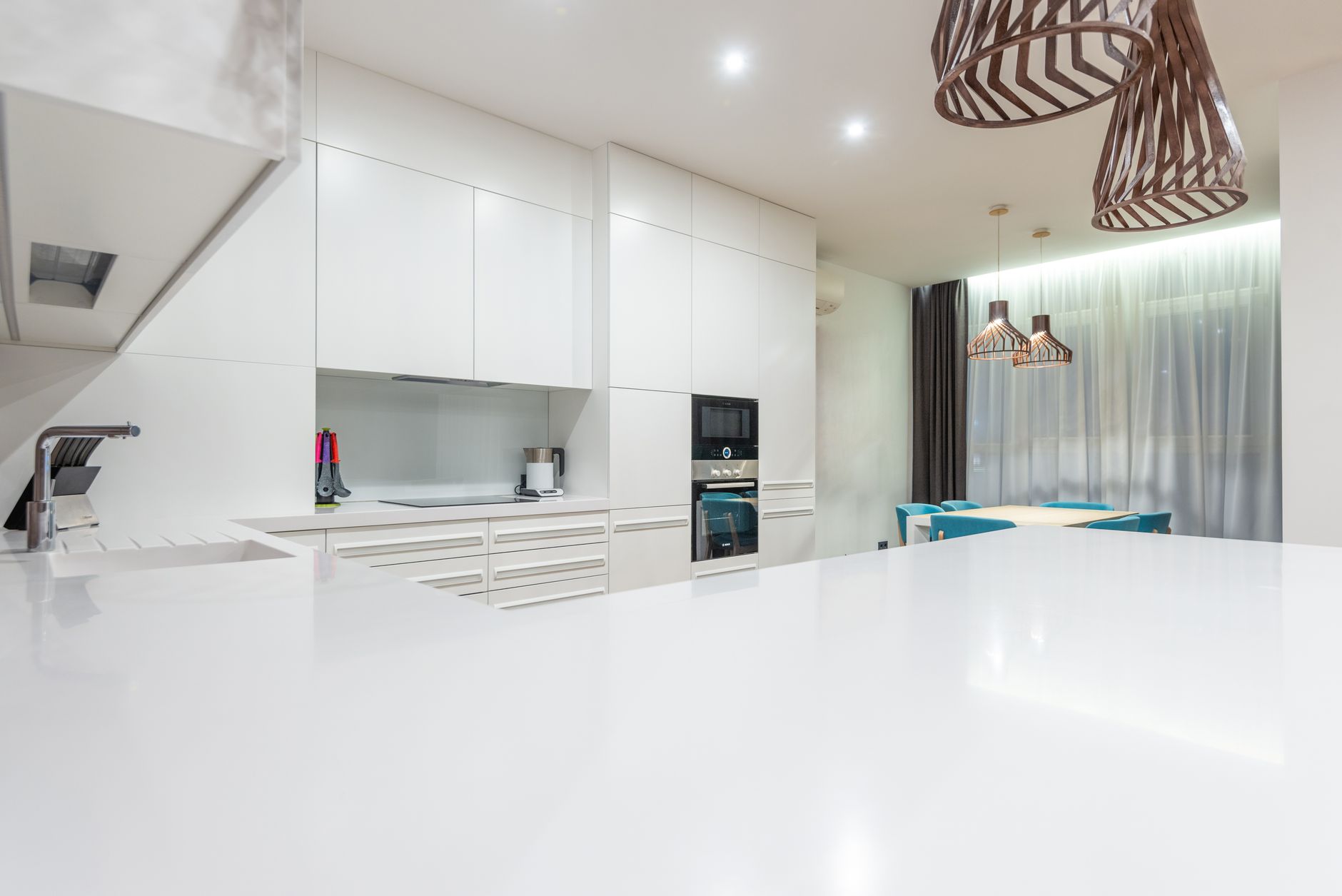
A homeowner adds an island, extends a run of cabinets or replaces a damaged section, and wants the new stone to look as if it was always there. That wish sounds simple and is surprisingly hard to satisfy, because natural and manufactured stone both vary from one batch to the next, and the existing counters have also been changing in the home for years.
Why a perfect match is unlikely
Natural stone is quarried from a particular layer of a particular block. Two slabs from the same quarry can differ in tone and veining, and a slab from a different block can look quite unlike the first. Manufactured quartz is more consistent, but it is made in production runs, and each run, called a lot, can have slight differences in color and speckle. A pattern discontinued years ago may still exist under the same name, but newer lots might be a shade warmer or cooler.
On top of that, the existing counter has aged. Sunlight bleaches or darkens some stones, sealers deepen others, and years of cleaning can alter the sheen. The goal is therefore a close, comfortable pairing rather than a pixel perfect twin.
Start by identifying what you have
Look for any paperwork from the original install, such as an invoice, a warranty card or a note left inside a cabinet. A name and a color on the paperwork is the best starting point. The original fabricator may still hold records, and some shops keep photos of past jobs. If nothing survives, photograph the existing counter in daylight from several angles and take a close photo of a clean, representative patch.
Distinguish the type of material first. Granite shows crystals and a distinct, slightly irregular pattern. Marble and quartzite often show flowing veins. Engineered quartz has an even speckle with a uniform, controlled look. Knowing the type narrows the search quickly.
Bring samples home
Never judge a match from a screen or from the light of a showroom. Take a large sample, not a small chip, and lay it on the existing counter at home. Look at it in morning light, at midday and at night under the kitchen lights. A stone that looks identical in a warm lamp glow can separate in daylight. Colors that match under one lamp and clash under another are called metamerism, and it is the reason side by side viewing in the real room matters.
Veining and pattern direction
Tone is only half the story. The scale of the pattern, the direction of veins and the amount of movement matter as much as color. A broad, sweeping vein beside a tight speckle reads as two different stones even if the base color is identical. Where the new piece will sit next to the old one, look for similar scale and similar direction. Where the pieces are separated by a sink, a range or a wall, the eye accepts more difference.
Use the break to hide the change
The smartest way to join old and new is to let a natural interruption separate them. A new island next to a perimeter run is a classic example, because the gap between them gives the eye a place to reset. Where the pieces must meet directly, a change in profile, a different edge or a deliberate seam can make the transition look intended instead of accidental.
- Place the join at an inside corner so the eye reads two planes, not one.
- Join at a cooktop or sink, where a visual break already exists.
- Use a contrasting material for the island and avoid a near match that invites comparison.
- Tie old and new together by repeating a color elsewhere, such as in the backsplash or hardware.
When contrast is the better choice
If a close match cannot be found, it can be better to choose something clearly different. A butcher block island beside a stone perimeter, or a darker stone against a light one, looks like a design decision. A near miss looks like a mistake. Many kitchens look better with two surfaces that are obviously chosen than with two that almost agree.
Adjacent surfaces matter
The counters are not seen in isolation. Cabinets, flooring, wall color and backsplash all influence how a stone reads. A pale counter beside warm wood floors looks warmer than the same counter in a cool gray room. When selecting a match, bring samples of the neighboring finishes too, and view all of them together on the counter, not in separate rooms.
Sheen and edge profile
Even a close color match falls apart if the surface finish differs. A polished piece beside a honed one looks like a different material. Check the sheen of the existing top by comparing reflections of a ceiling light in it. Then ask for the same finish on the new piece. The edge profile must also match, so measure the old one and share the details, including how rounded the corner is and how deep the drop is at the front.
Working with the lot problem in quartz
With manufactured stone, ask the supplier for the lot or batch number of the existing material if it can be traced, and request pieces from the closest run available. Some suppliers will arrange a sample from the current run before any slab is committed. If the present batch looks too different, ask whether older stock exists at another yard.
Weathered and sun-faded stone
Counters near large windows can lighten or shift color over time. In that case, the new piece will look darker beside the old one at first. Some stones slowly adjust to match once installed, but others do not, so do not count on it. Show the fabricator the faded area in particular and pick a sample against that area, not the shaded part near the wall.
Quick checklist
- Find the original name, brand or fabricator records if any exist.
- Photograph the existing top in daylight and at night.
- Take large samples home and view them against the real counter.
- Compare vein scale and direction as well as color.
- Match the sheen and the edge profile.
- Choose where the join falls so a natural break separates old from new.
The best matches come from patient comparison and honest judgment. If the two stones look right together in your own kitchen at several times of day, the match is good enough, and if they argue with each other, contrast is the more attractive answer.